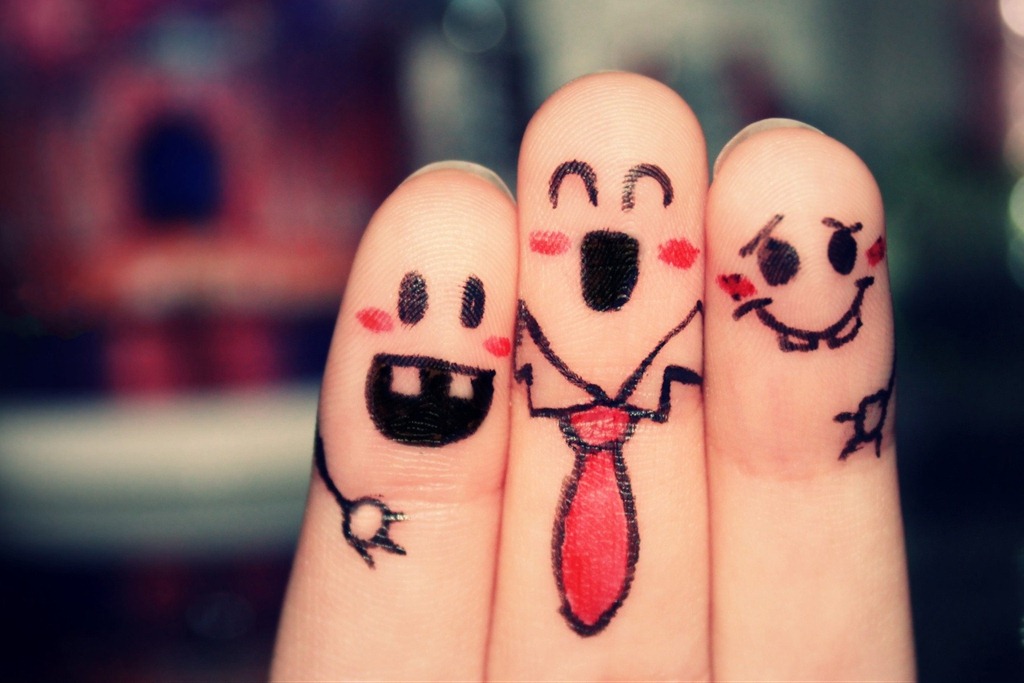
Showing posts with label friends. Show all posts

Thursday, March 12, 2015

Why It's Fun To Be Young


Why It’s Fun to Be Young.


“Who’s next?” my junior friend asks as we continue our game of “Guess The Character.”
“ME! ME!” I scream enthusiastically. I knew who I would pick even before we began the game.
I take my place at the center of our circle and wait for quiet. Suddenly, I slap my forehead in a ‘duh’ gesture.
“Hello Megan!”
My superb imitation is met with confused looks and a pitying gaze between two of my guy friends.
“Uncultured swine,” I think to myself sadly.
“So, who are you?” My first friend presses.
I sigh dramatically, not knowing why I expected them to react otherwise, “I’m Miss Martian, from Young Justice.


The first time I ever heard of Young Justice was when I was discussing another group of superheroes with a nerd friend of mine. “You should watch Young Justice,” she said, Then she proceeded to tell me about the death of one of the main characters that occurred right before the show was cancelled. I refuse to say “ended”. There’s no way that could be an actual ending. At first I didn’t care very much, since my parents needed to do a background check before they’d even consider letting me watch one episode. But once the disk arrived from Netflix with the first five episodes of season one, there would be no turning back.

“A superhero!” of course, is what a die-hard fan of the show wants to be when they grow up. I know I want to be a hero, or maybe even just a friend like Mal Duncan who stays behind to coordinate the team during missions. I mean, how awesome would it be to be friends with superheroes? Whenever I felt alone, like my friends had left me or didn’t understand me, I’d turn to the characters. Constant and caring, never abandoning their friends. Pretending Kid Flash was running alongside me in gym or helping me with my science homework made those tasks seem just a little bit easier. Sometimes Robin would take a break from stopping crime to help me with Algebra homework. Miss Martian is always by my side when I bake cookies. When I took archery last year, Artemis was there too, shooting bullseye after bullseye. Aqualad is racing with me in the pool on a hot summer’s day, or is just always there to listen with his sage leadership counsel. Zatanna’s always up for a shopping trip, no matter what mood she’s in. And when I’m totally sick and tired of my parents pressuring me or pushing me or just yelling at me and making me feel like I’m not adequate, I can always complain to Superboy, who knows how it feels to have troubles with your family.

The main characters of the show may be superheroes, but they’re also normal, everyday citizens of Earth, just like you or me. Aqualad has love troubles, as does Kid Flash. Superboy has “daddy” issues. Miss Martian is insecure. Artemis is trying to fit in at her new prep school. Zatanna and Robin are both dealing with the loss of family. They may be superheroes, but they have your problems too. Just ask Wally, who’s unsure how to tell his feelings to the girl he has a crush on. Or Kaldur, who can tell you how to handle rejection. Or Connor, who will tell you that the popular guy isn’t exactly as cool as you think he is. Or Artemis, who knows the consequences of keeping secrets.
The thing about Young Justice, is that everyone can relate. Whether it’s watching the typical teasing banter between two teammates, eating burned cookies just to make a friend feel better, winning a fight against your inner demons, pushing through a difficult breakup, trying to prove yourself to a parent or idol, finding a connection with the characters about getting used to new places; protecting your friends and family with your life; or just showing that life can move on when all hope seems lost, anyone can relate. Especially when you discover Miss Martian’s infatuation with a certain TV show, and realizing that you’ll soon be in a similar situation. Young Justice is a show about growing up and accepting yourself, learning what it really means to be a hero. And what does it mean? Well, I won’t tell you. Spoilers. The answer is different for different people. Perhaps you’ll be alone on your quest. Perhaps you’ll have the help of a trusted mentor. Or maybe you’ll even have that one friend who won’t stop bugging you and keeps urging you on. Young Justice has changed me, it has made my life easier, and helped me with my little, everyday problems as well as inspiring me and tons of other artists and authors who are dedicated fans of the show. I hope that what I have said here may inspire you to check out the partners of the Justice League just a little bit. If you are interested, just ask me! I'm always looking for fans to talk with (And just make sure you don't skip the first five episodes of season two, like I did at first) And in the immortal words of the very rebellious Red Arrow, “Don’t call them sidekicks.”

How to Win Friends and Influence People

In AP Lang, we were required to pick nonfiction books from a given list for a project that I still don’t understand. I was actually absent the day that the project was given so I only vaguely understand what this project is about. We were supposed to pick and get our books by the following Wednesday, which I unfortunately ignored until last minute. The night before the deadline, I searched frantically through the public library catalog for a nonfiction book on the list. I finally found a book that looked interesting and, more importantly, was available. I quickly wrote down the title of the book onto the sheet that we were supposed to turn in with our parent’s signature.

When I got to class, I was a little worried because I didn’t know if the teacher was going to check to see if I had the book or not. I dreaded having to be further disliked by my teacher. I’m pretty sure that I don’t really have a high reputation in her eyes. Not having my book would mean that I would have not done the assignment and I would have to borrow a book from her. Luckily she didn’t check to see if I had the book with me that day. After school ended, I went directly to the library and grabbed the book.


The book is probably one of the most interesting books I’ve ever read because it teaches valuable lessons for handling people. How to Win Friends & Influence People provides important information on how to be a leader and be successful. The main lessons were that one must be interested in others, one must always smile, and one must compliment and not criticize. The author, Dale Carnegie, teaches the lessons through anecdotes. He makes references to Abraham Lincoln, Teddy Roosevelt, and other successful people. There really weren’t any boring parts to the book.

I decided to try out some of the tips that were in the book. In the school library, I printed some documents and went up to the front desk to pick them up. However, before I walked up to the front desk, I searched up the librarian’s name because through the book, I learned that people tend to value their names. When I said, “thank you, Ms. ------“, instead of just simply handing over my printed pages, the librarian smiled back and genuinely seemed to appreciate my thanks.


But, it’s a real struggle to constantly be interested in other people. Like, it is so much easier to talk about my own achievements and thoughts than to be interested in someone else’s thoughts and problems. I guess that’s why people who genuinely are interested in other people are so well liked.


I really hope that I can at least remember a couple of the lessons from the book… then I could at least be partially successful in my life…

If you want, you can email me about anything at wtgl.lee@gmail.com

Wednesday, March 11, 2015

Listen

“That’s weird and scary, so I’m not going to touch that.”
“That’s weird and scary, so I’m not going to find out what it is.”
How many of us have thought like this in certain situations, whether it be facing an unidentified insect or a mysterious object?
The same applies for our instinctive response in facing a person with autism. Humans tend to retreat from the people who they presumably deem weird and scary.
Recently, I went to an orientation for a charitable organization that provides assistance to people with physical and mental disabilities. I was mind-blown. The lesson I received touched my heart deeply and I’m here to do the same to you guys.
When talking about people with autism, it can be summed up in one word: miscommunication. Why? Because their brain is wired differently from ours. You come up and say hi; they walk away. You try to start a conversation; they stare endlessly at the floor. You try to concentrate, but they keep tapping their feet or knocking on the table. We can all agree: synchronizing is hard. However, that doesn’t mean that it is impossible to understand their behavior and, more importantly, the people themselves.


Amelia Amanda Baggs, an American autism activist, sheds light onto our self-centered ignorance. She moves the world with this documentary of herself and her personal blog. She explains in our normal language the meaning of the peculiar behaviors – that they are the mechanisms the people with autism use to communicate with the world around them. These behaviors are their way of understanding their surroundings: they feel all the events happening around them with exaggerated sensibility. Animated and unanimated objects speak to them at an intensified level. The view they see is magnified to the extreme.
It is not weird. It is different.
Just as every single individual on this planet.
This is their language.
The language is too eccentric? Hard to understand?
Well, don’t we say the same thing when we hear a foreign language such as Thai or Mien? How do we respond when a person speaking an unknown language asks for help? Well, at the very least, I would say, we will try and figure out the message by context clues. And the way to notice those is to really listen to the message.
Let me ask you this question: How do you listen?
Do you hear the sound with your ears?
Does the sound come through your ears and go straight to your brain?
Not really.
Listening is trying to understand the speaker’s message, so it actually requires ears to detect sound, eyes to observe gesture, brain to utilize top-down processing, and the heart to open up and offer with sincerity. Let’s look at the people more closely; wonder at the way they take in the world and be amazed, because with this hyper-perception, they notice so much more than we do.
They are wired wrong? Tell me the correct layout.
They look different? Tell me which part – the color of their hair, the number of eyes, their height, or their clothes?
They have a handicap? They’re unfortunate? Oh now you’re dead wrong.

Albert Einstein, scientist


Temple Gradin, designer of the slaughterhouse


Tony Deblois, blind American musician


 Dylan Scott Pierce, painter


Wolfgang Amadeus Mozart, composer


Jessica-Jane Applegate, Paralympic swimmer


James Hobley, British dancer and 2011 Britain's Got Talent finalist

Thristan Mendoza, Filipino marimba prodigy


James Henry Pullen, British carpenter


and many more.

Let’s have a show of hands of how many of us can do one of the achievements mentioned.
They are beautiful beings gifted with a special mission.
We are not the ones who will teach them. They are the ones who will teach us.
Well, the lesson at the orientation didn’t do much as reiterating how to listen, but it taught me how to annihilate the burdening and condescending attitude that I held toward people with autism. It reminded me that my only mission is to simply become their friends, and that is the most successful channel that will link all human beings together.

Email me if you have questions :)


Wednesday, May 21, 2014

"Why Can't We Be Friends?"

In the immortal lyrics by War, “why can’t we be friends?" We as humans are naturally social and depend on one another to survive. So, why is it so hard to keep a friendship alive? Is it that we suddenly recognize their faults and are too incapable or stubborn to look past this occurrence, or is it us? Is it that we always find a way, especially as teenagers, to use our hormonal behavior and desires to drive others apart from us? Is the greed and jealousy and insecurity fueling our hateful fire? Is it that we were blind to the faults in front of us, as we wished to believe in true companionship? Or is it them?

 It’s the classic scenario: we meet someone, we fall in love with their charm, and suddenly the “it” factor is masked by the fact that they dominate every conversation, or only talk about three different subjects, or can’t have a talk without butting in their overly biased, personal opinion. What gives? How did this go downhill so fast?

 And you can’t help but feel like a horrible person when all of a sudden, this person you raved about and shared so much with is now your enemy. You can’t stand to hear them or look at them and suddenly, every action they do pisses you off to no end. You can’t help it. That’s the point. We can’t change or apologize for how we feel; we can only alter the way we present ourselves and act around this person. But, does this mean the friendship is over?

In a sense, the friendship and relationship you once had is irrevocably changed forever, and nothing can be done to revive this once strong bond between friends. You go along with your life, at first with distance, later with little shameful and shy waves of hello completely countering the enormous bear hugs you used to give one another. Then, in the final stage, you are strangers. You pass eachother in the hall or at a store and act as if the intimate and passionate relationship you once shared never occurred. Vansihed. 

How are we supposed to deal with this? It seems as if this empty space stings more than the relationship. We try to justify it, saying it was their fault or ours, or that it was somehow better to end the interaction. But logic and reasoning cant justify the feeling of having nothing to do on a Saturday night. It can’t help with the pain of watching your groups take sides between once close partners.

Could it have been prevented? Could I have done more? Could they have tried harder to control their behaviors, or should I have tried harder to look past them? Who is to blame, and how can we stop this horrible event from tainting future endeavors to a harmonious and happy social life? 

Sunday, May 15, 2011

When Hugs Become Awkward

Awkward hugs; we’ve all experienced them at one point or another. These hugs may be unwanted, misplaced, or even stiff yet; they may end up bringing people closer than one might have thought.
I, for one, have had my fair share of awkwardness and have noticed that many of my awkward hug experiences tend to occur at school. Why you may ask? Well, I have thought long and hard about this and have come to three plausible reasons why school is the root cause of awkward hugs.
For one, there is this thing students’ carry on their backs as they go from class to class. I believe it is commonly referred to as a backpack. As students walk down the halls, they spot their friends and walk toward each other. Now, none of this is awkward until…they go in for the hug itself. The two friends, usually a girl and a girl or a boy and a girl, open their arms wide, approach each other until they reach their intended distance, and finally wrap their hands around the other’s…backpack? The backpack causes for uncertainty because huggers are no longer hugging the person, but their backpack. The hug is no longer an intimate sign of appreciation or thanks, but becomes a symbol to students everywhere of what to avoid. When the hug is over, I have noticed that the two people do one of two things. They either look shyly away from each other, hoping to erase the moment from their memories or they look straight into each other’s eyes and burst out laughing. This second action is a healthy sign for the participants because they have demonstrated to others that awkward moments can lighten the atmosphere and be forgotten with a good-hearted laugh and a genuine smile.
The second type of uncomfortable hug is the uneven hug. This occurs when people are different heights, one being extremely tall and the other being exceptionally short. When the two huggers approach each another, the awkwardness begins. For the time being, the tall person will be the guy and the short person will be the girl. If the roles are reversed, the situation may become more awkward for obvious reasons. Now, the tall person debates if he should bend down to hug the other. If he chooses to bend down too late, their arms might become twisted and oddly intertwined. However, if he chooses to stand at normal height, he may find himself patting the person’s head or hugging her with one arm to avoid making the height different more noticeable. The shorter person finds this situation awkward because she cannot reach the shoulders of the other. So, she becomes stuck hugging his waist and may start to feel crushed and a tad big claustrophobic. If, for some reason, the male has chosen to disregard the shower beforehand, the girl may become disgusted and may choose to avoid him at future encounters at school.  While this situation does not occur very often, when it does, the only thing to do is hope that the huggers smell clean and that the decision to bend down has been made in advance. With such measures, the moment should hopefully be awkward-free, allowing others to be optimistic about height differences and hugs.
The third and final awkward hug is the all-too-detested hug from behind. This occurs when a friend (let’s call him Bob) approaches another friend (let’s call her Sally) from behind. As Bob sees Sally, he realizes that her back is facing him and he will be unable to hug her from the normal position because she is surrounded by a group of her friends. Bob’s conclusion: it is necessary for me to give Sally a hug, so I might as well do it from behind. If Bob’s conclusion sounds like something you would do, PLEASE, PLEASE, PLEASE refrain from acting upon it! Hugs from behind are awkward for both parties involved. If Bob decides to act on his impulse, Sally will feel uncomfortable because, for one, she did not even see the hug coming. How would you feel if all of a sudden you see two arms grabbing you from behind? Weird? Embarrassed?  If you answered yes to both, then good for you because that is exactly how Sally feels. Sally also feels odd in this situation because she doesn’t know if she should turn around and face Bob in order to return the hug. If she doesn’t turn around, she will be hugging him like she is tied to a pole, but if she does turn around, what will he do with his hands? If Sally rotates, Bob will have to disengage in the hug, only to re-engage two seconds later. This causes the timing of the hug to be off, making the two participants unsure of when to stop their hugging. While the back-hug is occurring, Bob may finally realize that his decision to hug Sally was not one of his finest moments. But it will be too late; he has already engaged in the hug. Bob must continue his back hug with Sally and they must face the awkwardness together.
While the first two hugs can be performed correctly if the participants fully understand the situation, the hug from behind can and will never be executed properly because it is just too awkward. Therefore, in order to avoid the most awkward hug of all hugs, please refrain from participating in this type of embrace, it just might save your reputation.
For my next blog, I will discuss handshakes.
If you want to see more awkward hugs visit:http://theoatmeal.com/comics/hugs
or you can email me at: nicole.lipka